White paper · Featured · 2026 edition
The Complete Guide to Industrial Vision AI in 2026
How manufacturers and systems integrators use industrial Vision AI to reduce downtime and automate visual inspection for complex production environments.
Beyond a successful demo.
Built for production.
Industrial Vision AI combines imaging, learned models and production software to inspect products whose appearance is too variable for fixed rules alone. But reliable inspection takes more than an accurate model: the imaging must reveal the defect, the system must fit the line, and performance must be maintained as production changes.
This guide brings those decisions together. It explores difficult inspection applications, the relationship between inspection and downtime, edge deployment, the build-versus-buy-versus-partner decision, and the responsibilities that continue after commissioning.
For manufacturers, it is a framework for evaluating production fit and long-term value. For systems integrators, it is a guide to selecting the capabilities and partnerships needed to deliver complex inspection projects.
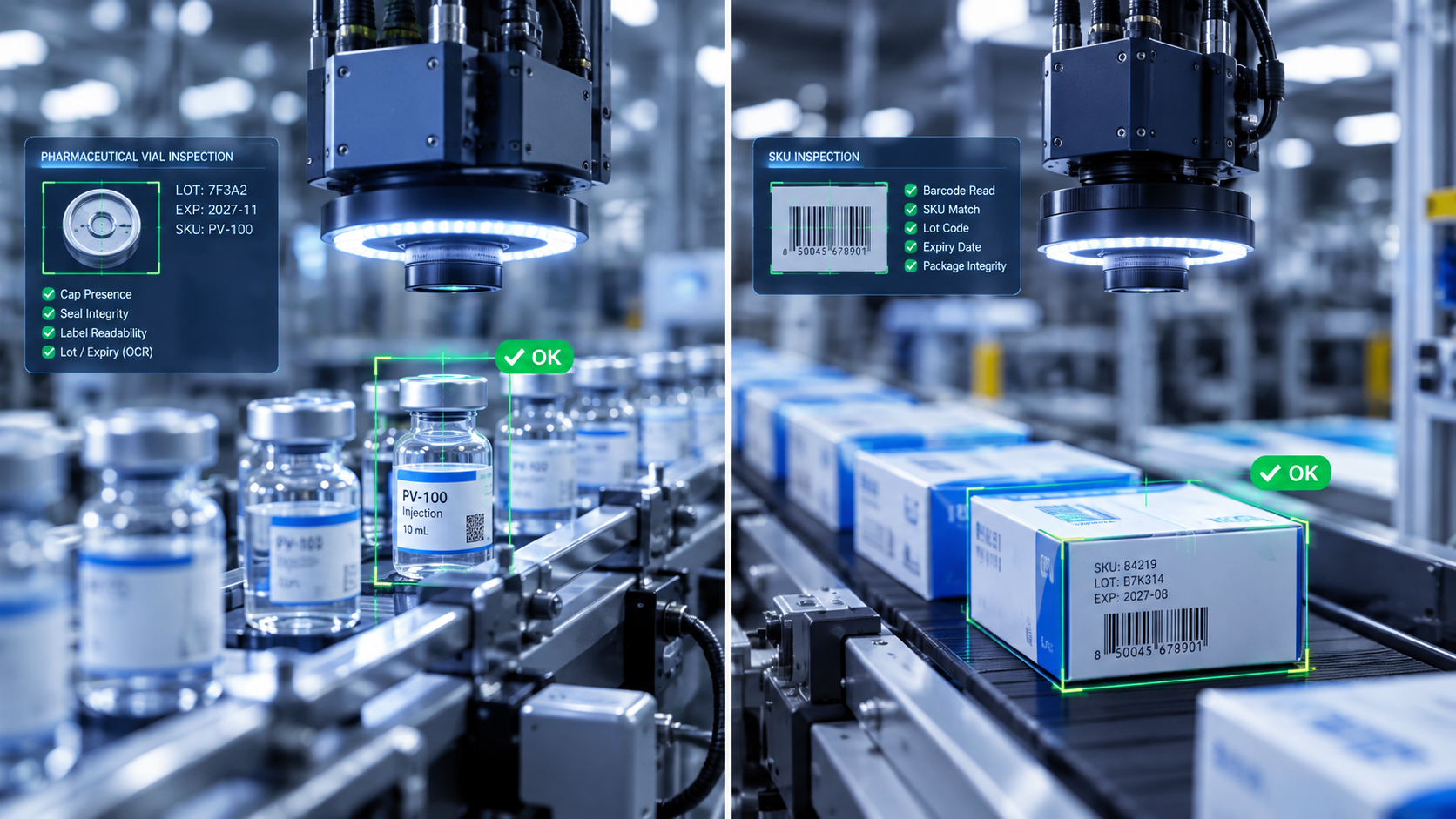
Nine perspectives. One production challenge.
- 1
Why industrial Vision AI matters in 2026
The production and economic pressures behind the shift from manual inspection and fixed rules to learned visual inspection.
- 2
Where traditional machine vision stops
What changes when defects, materials and product appearance vary — and why a better model alone is not always enough.
- 3
Inspection and downtime
How earlier detection, fewer false rejects and better visibility into production can help address avoidable stoppages.
- 4
Build, buy or partner
A decision framework for weighing internal AI capability, packaged platforms and specialist technology partnerships.
- 5
From imaging to production
The deployment lifecycle: imaging, data, model development, integration and ongoing monitoring as operating conditions change.
- 6
The 2026 provider landscape
How to evaluate established machine-vision suppliers and AI-native providers against the needs of your application.
- 7
An operations manager’s checklist
Evaluate production fit, lifecycle support and operational value — not just performance in a demonstration.
- 8
A systems integrator’s perspective
What to look for in a Vision AI partner when delivering a complete inspection solution for a manufacturer.
- 9
What comes next
The move toward edge-native systems and visual intelligence integrated into production workflows.
Three questions to ask before you commit.
Can the camera see the defect?
A model cannot recover a flaw that the image does not reveal. Reflective finishes, deformation and variable materials make imaging engineering a central part of the inspection solution.
Does it fit the production line?
Look beyond a benchmark. Consider cycle time, connectivity, data requirements and integration with existing equipment. Edge inference addresses timing and data-control needs close to the process.
Who owns performance after launch?
Lighting, SKUs and production conditions change. Define who monitors performance, gathers new data, retrains models and validates updates before deciding how to build, buy or partner.
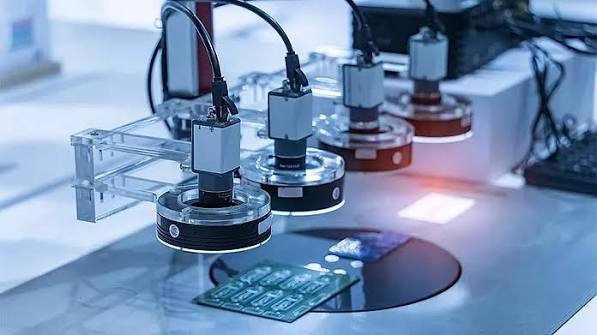
Industrial Vision AI: key questions.
Get the complete 2026 guide
Make the next inspection decision with the full picture.
Download the complete paper for the deployment framework, provider landscape and evaluation criteria for manufacturers and systems integrators.