Edge Vision AI vs Cloud: What Regulated Manufacturers Need to Know
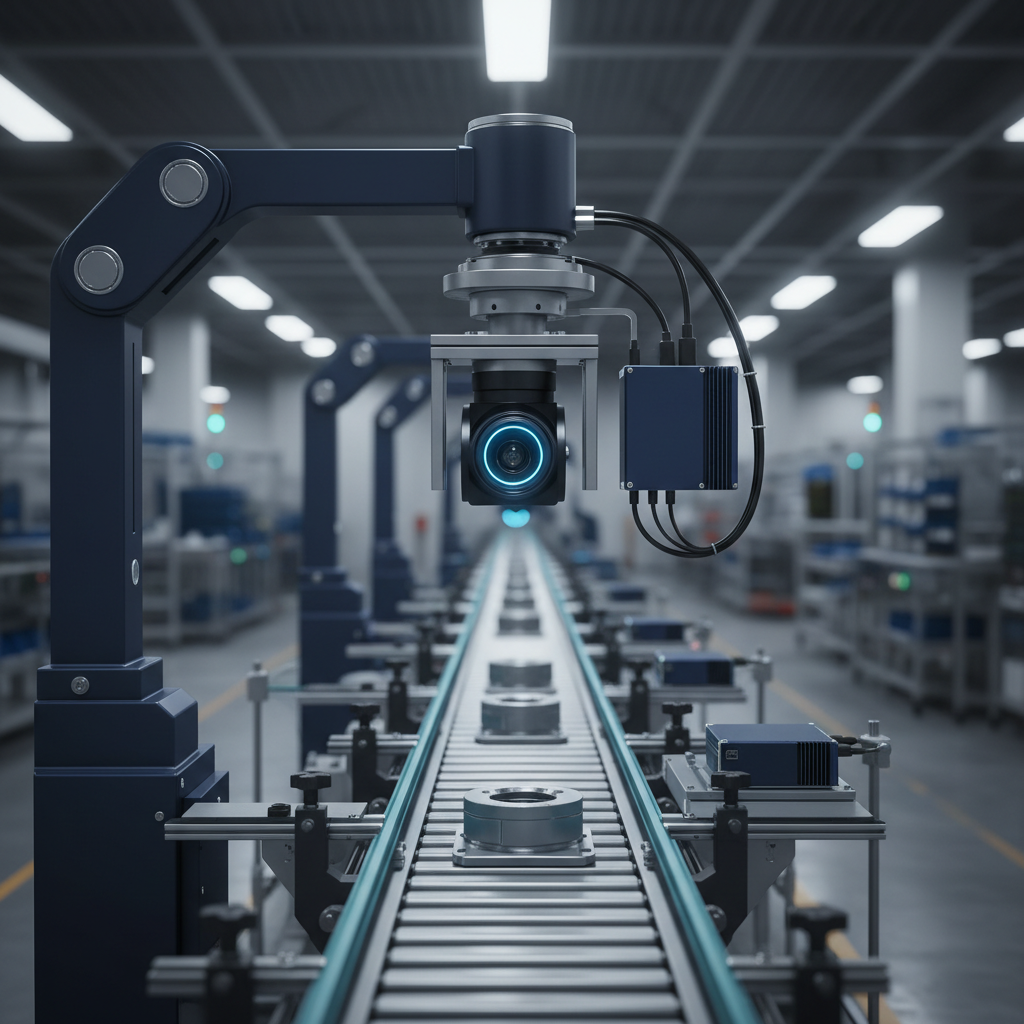
For regulated manufacturing—think pharmaceuticals, medical devices, and food & beverage—the deployment of advanced technologies like Vision AI demands careful consideration. While cloud AI offers scalability and computational power, edge Vision AI presents a compelling alternative, particularly where data sovereignty, latency, and operational continuity are paramount. Understanding the distinctions between these two approaches is critical for engineers, QA leaders, and operations leaders navigating digital transformation.
The Latency Imperative in Regulated Production
Manufacturing processes in regulated industries often feature critical, high-speed operations where real-time decision-making is essential. A slight delay can mean the difference between a compliant product and costly waste, or worse, a safety recall. Cloud-based Vision AI, by its very nature, introduces network latency as data must travel to a remote server for processing and then back to the edge device for action.
"In our high-volume production lines, even milliseconds matter. Edge processing ensures our Vision AI can react instantly to quality deviations."
Edge Vision AI, in contrast, processes data directly on-site, minimizing or eliminating network transit time. This localized processing is vital for applications like immediate defect detection on a fast-moving conveyor belt, precise robotic guidance for assembly, or real-time temperature monitoring in sensitive environments, ensuring that the Vision AI system can respond without perceptible delay.
Data Sovereignty and GxP Compliance
Good Manufacturing Practices (GxP) and other regulatory frameworks impose strict requirements on data handling, integrity, and security. For many regulated manufacturers, the idea of sending sensitive production data—including batch records, quality control images, and audit trails—outside their direct control to a third-party cloud provider raises significant compliance and legal concerns. Data sovereignty, which dictates that data is subject to the laws of the country in which it is processed and stored, adds another layer of complexity.
- Data Residency: With edge Vision AI, all data processing and storage can occur entirely within the manufacturer's facility, maintaining full control and ensuring compliance with local regulations.
- Auditability: On-premises data retention simplifies audit processes and demonstrates adherence to GxP principles, as data never leaves the controlled environment.
- Confidentiality: Edge deployments reduce the exposure of proprietary manufacturing processes and sensitive product information to external networks and third-party infrastructure.
Network Reliability and Operational Continuity
In a regulated manufacturing environment, downtime due to network outages or connectivity issues is simply not an option. Production lines must run continuously, and quality assurance cannot be compromised by intermittent cloud access. A cloud-dependent Vision AI system is vulnerable to:
- Internet service provider (ISP) outages
- Network congestion
- Cyber-attacks targeting cloud infrastructure
- Regional cloud service disruptions
Edge Vision AI operates independently of continuous cloud connectivity once deployed. While it may rely on the cloud for initial model training or periodic updates, its core inferencing capabilities remain robust even in the event of network disconnection. This autonomy ensures uninterrupted operation, crucial for maintaining production schedules and adherence to strict quality protocols. This architectural resilience is a key differentiator for critical applications.
Total Cost of Ownership (TCO) and Scalability
The TCO for Vision AI solutions goes beyond initial acquisition. Cloud solutions often come with variable operational costs, including data ingress/egress fees, compute time, and storage, which can become unpredictable at scale. Edge deployments, while potentially requiring a higher upfront investment in hardware, offer more predictable, fixed costs over their operational lifespan.
Validation Burden (CSV/GAMP 5)
Computer System Validation (CSV) adhering to standards like GAMP 5 is a significant undertaking for any regulated manufacturer. The validation scope for a cloud-based Vision AI system can be more complex due to shared infrastructure, multi-tenancy implications, and the need to validate a third-party's environment. Edge Vision AI, being a more contained system, can simplify the validation process by:
- Limiting the scope to a controlled on-premises environment.
- Providing direct access to all hardware and software components for verification.
- Reducing the number of external interfaces requiring validation.
This streamlined validation can significantly reduce the time and resources required to bring new Vision AI applications online.
Cyber-Attack Surface Reduction
Connecting operational technology (OT) to the cloud inherently expands an organization's cyber-attack surface. Each new connection point is a potential vulnerability that can be exploited. Edge Vision AI, by keeping sensitive data and critical processing confined within the factory's local network, significantly reduces external exposure to cyber threats.
For regulated manufacturers, the decision between edge and cloud for Vision AI deployment is multifaceted. While the cloud offers undeniable advantages in certain contexts, for high-stakes environments where latency, data sovereignty, network reliability, predictable TCO, simplified validation, and security are paramount, edge Vision AI presents a superior and often necessary choice. Explore how AcuSight's edge Vision AI platform can meet your specific regulatory and operational needs. Book a demo today to see our solutions in action.
Written by
David Steele
Co-founder & CEO, BrinqAI
David Steele leads BrinqAI, building edge vision AI for regulated manufacturers in pharma, food and beverage, and beyond.
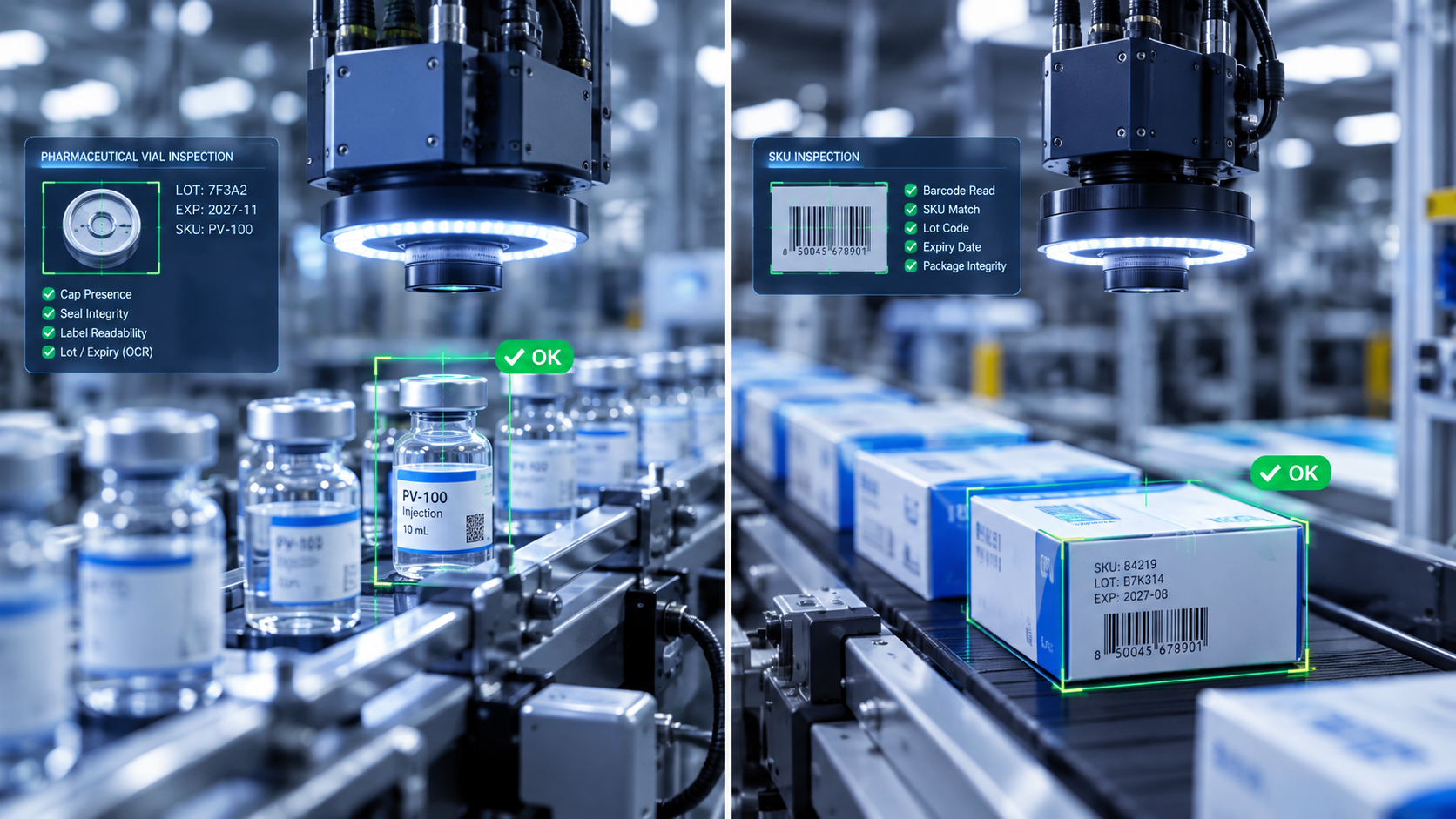
The Complete Guide to Industrial Vision AI in 2026
A practical field guide for manufacturers and systems integrators — complex inspection, reducing downtime, deployment, lifecycle management, and the 2026 provider landscape.
How should US manufacturers choose an edge AI platform for anomaly detection?
US manufacturers should choose an edge AI platform for anomaly detection on six criteria: inference latency on the line, whether production data stays on-premises, integration with PLCs and MES, a built-in path to retrain models as products and conditions change, freedom to use existing cameras and edge hardware, and support for delivery through a system integrator. Validate all six on your own parts and line before committing to a production deployment.
Fleet management with Vision AI: Synaptics SL1680
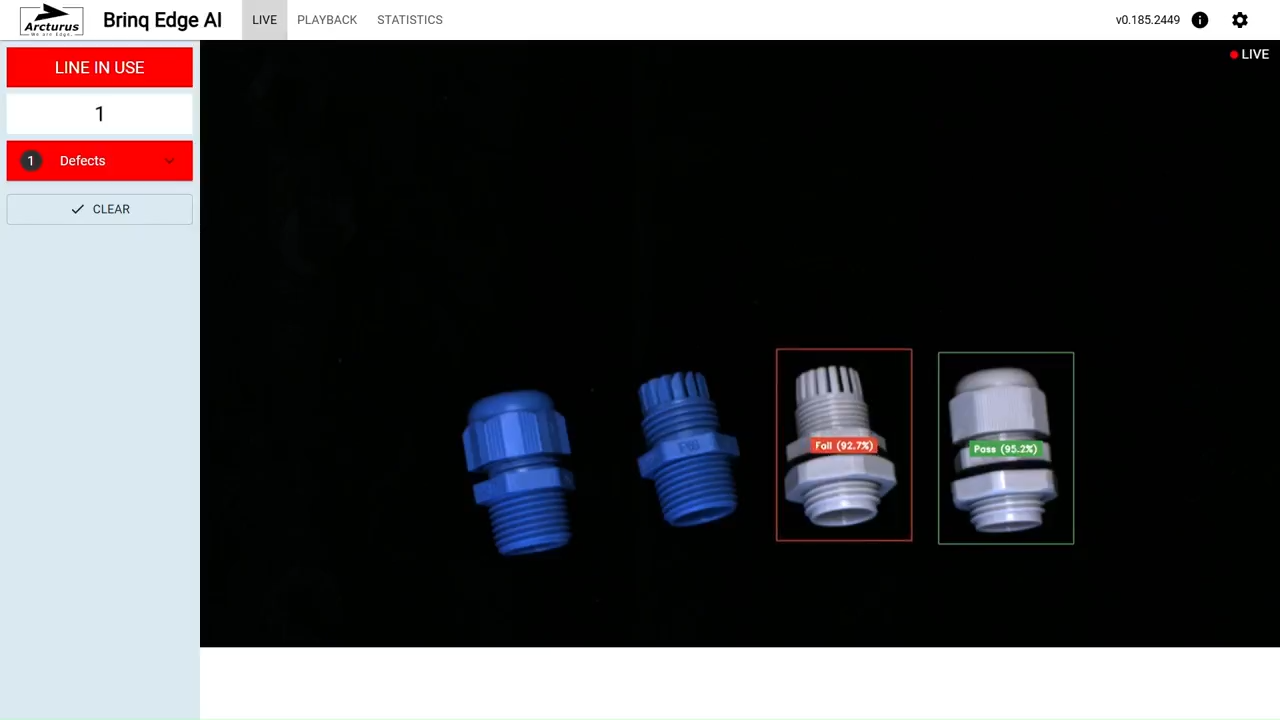
David Steele demonstrates AcuSight running on the Synaptics SL1680 at Embedded World — industrial inspections such as verifying correct gland assembly, with pass/fail assessments on the spot.