Line Clearance Best Practices for Pharmaceutical Manufacturing

Strict adherence to line clearance protocols is non-negotiable in pharmaceutical manufacturing. The consequences of inadequate clearance—ranging from product cross-contamination to mislabeled components—pose significant risks to patient safety, brand reputation, and regulatory standing. Traditional manual verification processes, often tedious and prone to human error, struggle to meet the increasing demands of modern production environments and stringent GMP guidelines.
The Criticality of Pharmaceutical Line Clearance
Line clearance is the process of ensuring that a production line is completely free of materials from the previous batch before starting a new one. This includes raw materials, in-process materials, bulk products, labels, and packaging components. For pharmaceutical manufacturers, this meticulous process is fundamental to preventing adulteration and ensuring product integrity.
GMP Requirements and Regulatory Scrutiny
Global Good Manufacturing Practice (GMP) regulations, such as those outlined in FDA's 21 CFR Part 211.80 and European Medicines Agency (EMA) documents like EU Annex 1 (Manufacture of Sterile Products) and Annex 15 (Qualification and Validation), demand robust line clearance procedures. These regulations emphasize documented verification, proper training, and stringent controls to eliminate contamination risks. Failure to comply can result in severe penalties, including recalls, consent decrees, and operational shutdowns.
"Inadequate line clearance is a leading cause of pharmaceutical product recalls related to cross-contamination or mislabeling."
Common Failure Modes in Manual Line Clearance
Despite best intentions, manual line clearance is inherently susceptible to a range of human errors, leading to costly and dangerous outcomes:
- Cross-contamination: Residual active pharmaceutical ingredients (APIs) or excipients from a previous batch inadvertently mix with the current batch.
- Residual Product: Leftover finished product or in-process materials remaining on the line.
- Mislabeled Components: Erroneous labels or packaging materials from a different product or batch being applied.
- Incorrect Component Introduction: Introduction of wrong components at any stage of the process after clearance.
The financial impact extends beyond remediation costs. Production downtime for re-clearance, disposition of non-conforming batches, and potential legal fees contribute to substantial losses. More critically, patient trust and safety are compromised.
How Vision AI Transforms Line Clearance Verification
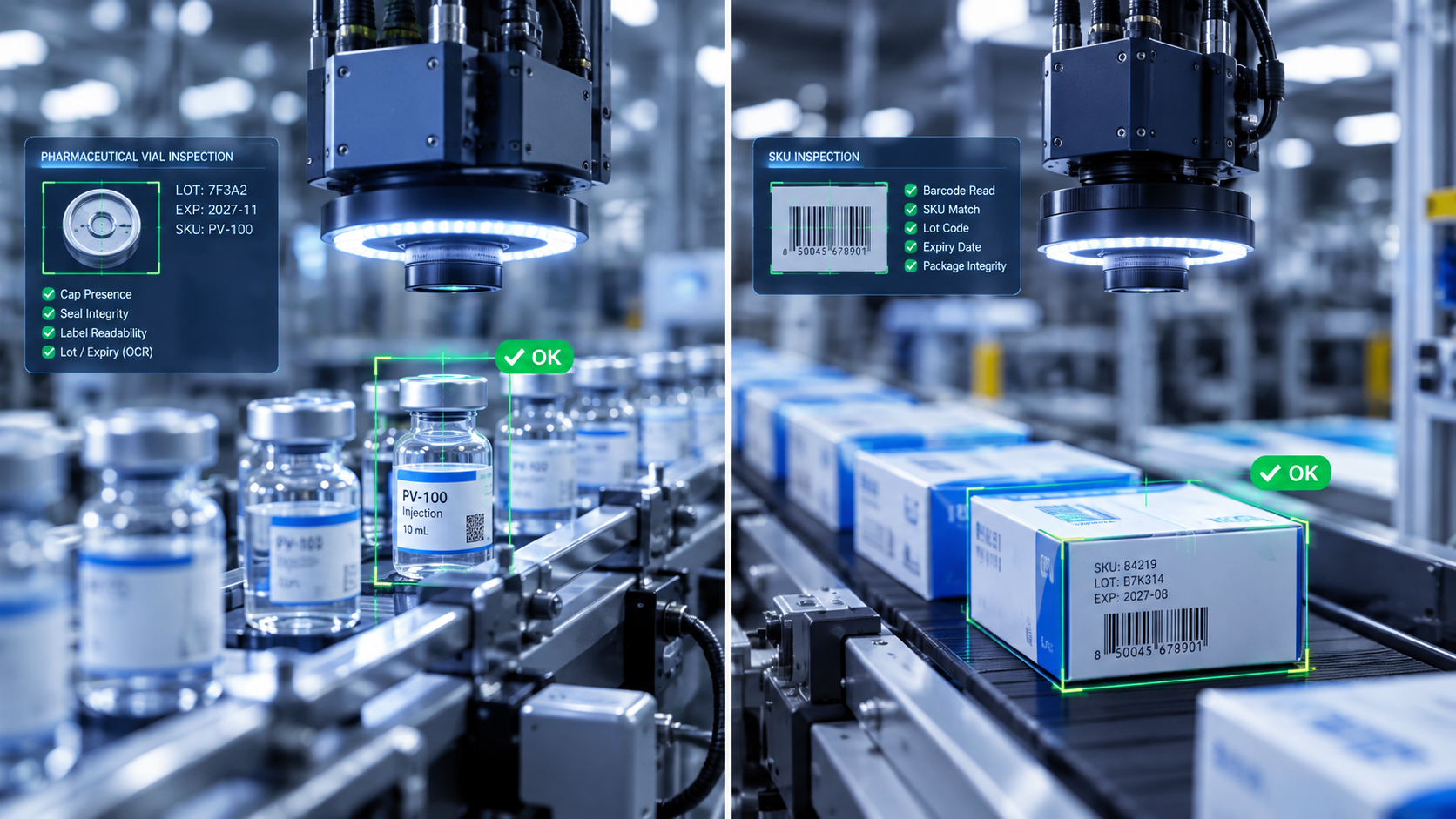
Vision AI offers a powerful and precise alternative to manual line clearance verification. By deploying advanced camera systems and machine learning algorithms at the edge, manufacturers can automate the detection of foreign objects, residual materials, and incorrect components with unparalleled accuracy and speed. This technology acts as an unblinking, indefatigable inspector, ensuring every inch of the line is clear.
The AcuSight platform excels in these applications, providing robust Vision AI capabilities tailored for regulated industries. Deploying edge Vision AI means processing data locally, ensuring real-time decision-making without latency concerns often associated with cloud-based systems. This is particularly crucial in high-speed pharmaceutical lines where immediate error detection is vital.
Benefits of Automated Vision AI Verification:
- Enhanced Accuracy: Eliminates human fatigue and subjective judgment, providing consistent, objective verification.
- Reduced Risk: Minimizes the potential for cross-contamination, mislabeling, and other critical errors.
- Increased Efficiency: Significantly reduces line clearance times, leading to higher throughput and less downtime.
- Auditable Evidence: Generates a digital record of every inspection, providing irrefutable proof of clearance—essential for GMP compliance and supporting regulations like 21 CFR Part 11 for electronic records.
- Proactive Identification: Can detect subtle anomalies that might be missed by the human eye, preventing issues before they escalate.
Integrating Vision AI into existing pharmaceutical operations not only addresses current challenges but also future-proofs processes against evolving regulatory landscapes and increasing production complexity. The ability to automatically document and verify every step of the line clearance process provides pharmaceutical companies with an invaluable tool for maintaining high quality standards and regulatory compliance.
Implementing a comprehensive Vision AI system for line clearance represents a significant step forward in operational excellence and risk mitigation for pharmaceutical manufacturers. By embracing this technology, companies can achieve higher levels of assurance, protect patient safety, and optimize their production processes. To learn how BrinqAI can customize a Vision AI solution for your specific manufacturing needs, book a demo with our experts.
Written by
David Steele
Co-founder & CEO, BrinqAI
David Steele leads BrinqAI, building edge vision AI for regulated manufacturers in pharma, food and beverage, and beyond.
The Complete Guide to Industrial Vision AI in 2026
A practical field guide for manufacturers and systems integrators — complex inspection, reducing downtime, deployment, lifecycle management, and the 2026 provider landscape.
How should US manufacturers choose an edge AI platform for anomaly detection?
US manufacturers should choose an edge AI platform for anomaly detection on six criteria: inference latency on the line, whether production data stays on-premises, integration with PLCs and MES, a built-in path to retrain models as products and conditions change, freedom to use existing cameras and edge hardware, and support for delivery through a system integrator. Validate all six on your own parts and line before committing to a production deployment.

Fleet management with Vision AI: Synaptics SL1680
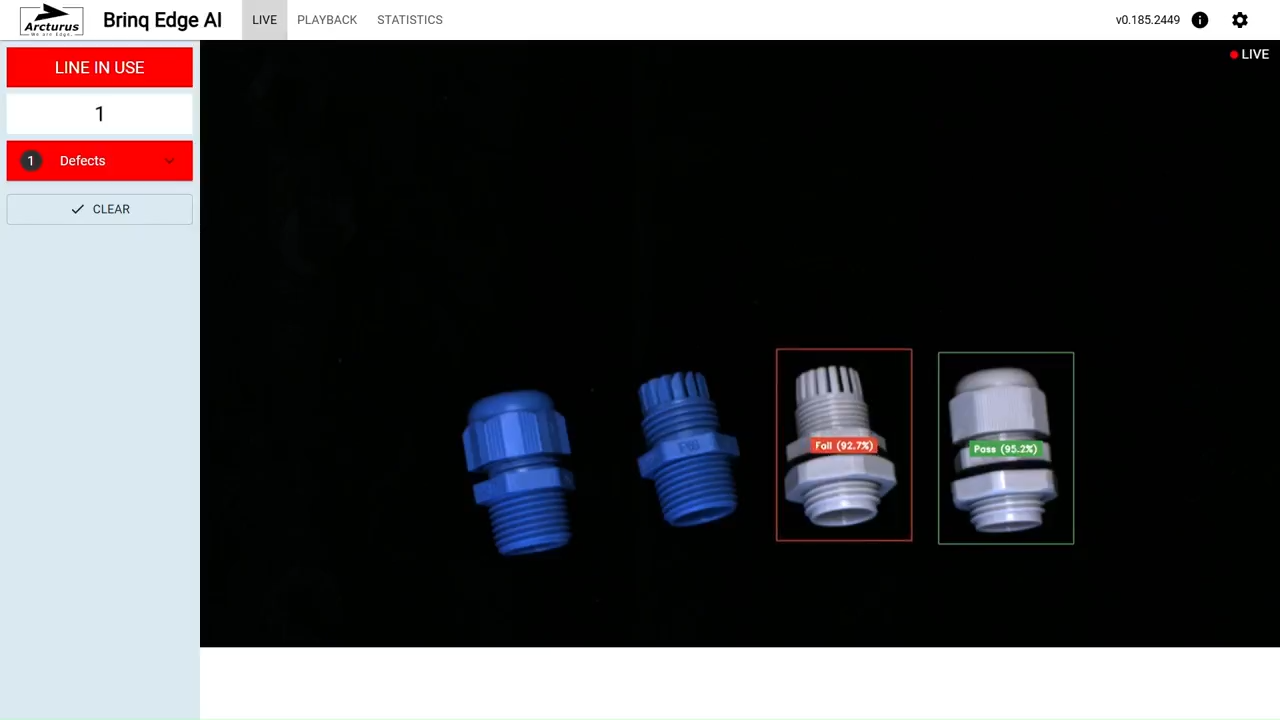
David Steele demonstrates AcuSight running on the Synaptics SL1680 at Embedded World — industrial inspections such as verifying correct gland assembly, with pass/fail assessments on the spot.